
The brain’s resident immune system
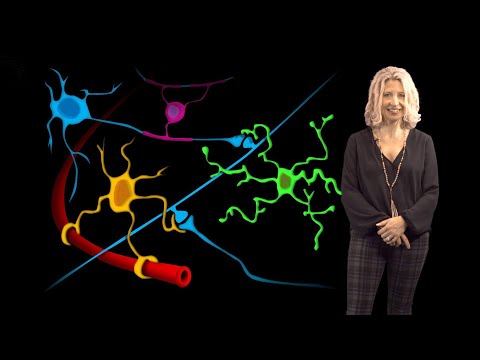
Microglia are the brain’s resident immune cells, making up roughly 5 to 10 percent of the cells in the brain. In health they constantly survey their surroundings, clear debris and dead cells, and help sculpt connections between neurons during development. Astrocytes, the same cells whose endfeet line the glymphatic pathway, also participate in immune signalling.
Inflammation in the brain is therefore not inherently bad; it is a repair response. The concern is when it becomes persistent and dysregulated.
The link to neurodegeneration
In Alzheimer’s disease, microglia cluster around amyloid plaques, and several of the strongest genetic risk factors for late-onset Alzheimer’s, such as variants in TREM2, affect microglial function. The National Institute on Aging describes chronic inflammation as one of the brain changes, alongside amyloid plaques, tau tangles and vascular problems, that together damage neurons.
Clearance and inflammation are connected in both directions. Accumulating protein waste provokes microglial activation, and inflammation can impair the fluid pathways that would remove that waste, including by altering aquaporin-4 placement on astrocytes. Nedergaard and Goldman’s 2020 review treats this feedback loop as part of the proposed common pathway to dementia.
What researchers are doing about it
Immunology is now one of the most active areas of dementia research, from drugs that modulate microglial receptors to studies of how sleep, infection and the gut influence brain immunity. For non-specialists, the most useful takeaway is that brain health is not only about neurons; the support and immune cells are where much of the action is.
Watch
How to read this page
This is general educational background drawn from the sources below. It is not medical advice, and it is not evidence that any NeuroClearance system works. Where a finding comes from animals or from a small human study, the text says so.